Journal
What to pack for February in the Arlberg
7 min read · June 2026
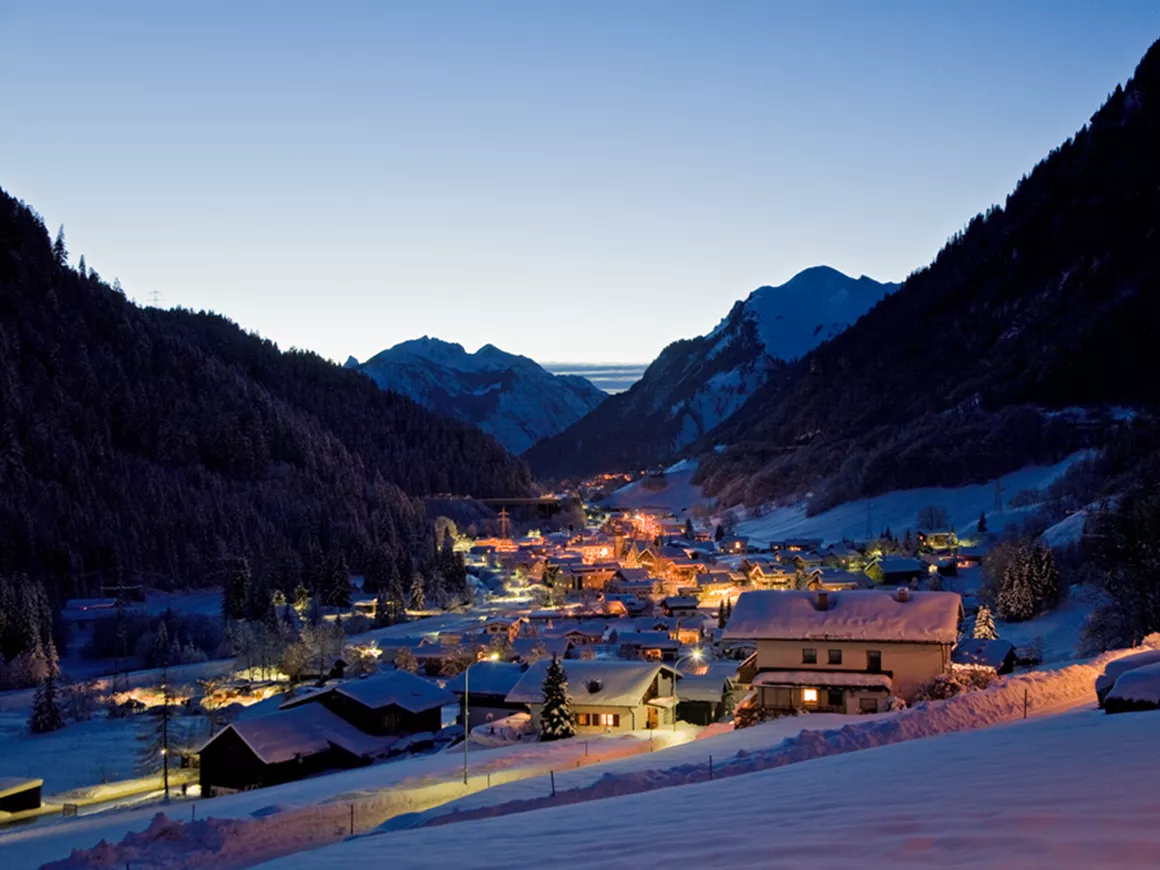
February is the fullest version of winter at the Arlberg. The snowpack is at its deepest — typically a metre or more at mid-mountain, considerably more at the upper lifts — and the days, though still short by most measures, have begun to lengthen noticeably since January. By mid-February, you have close to ten hours of daylight. Sunrise is around seven-thirty; the last light leaves the peaks at around six.
The temperatures are genuinely cold. In the valley at Schnann, daytime highs in February tend to hover around zero, sometimes a few degrees below. At altitude — above 2,000 metres — the cold is sharper and more consistent, and on a windy day at the top of the Valluga it can feel considerably colder than the thermometer suggests. This is not a reason to worry; it is a reason to pack correctly.
On the mountain
The single most important thing to understand about ski clothing is that layers matter more than any individual garment. A day on the Arlberg in February can begin at -10°C in the morning shadows and warm to something approaching mild on a south-facing slope in the early afternoon. The mountain doesn't have one temperature — it has several, and you'll move through all of them.
Base layers. Merino wool or a technical synthetic — not cotton, which holds moisture and loses its insulating value when damp. Two sets is enough for a week, since most decent base layers dry overnight. Long sleeves and long bottoms; the cold at altitude will find any gap.
Mid layer. A fleece or a down vest, depending on how you run. If you tend toward cold, a lightweight down jacket under your ski shell; if you tend warm, a fleece or grid-knit top is usually enough. The key is something you can compress easily into a pocket or backpack if the afternoon warms up.
Ski jacket and trousers. Waterproof and breathable — Gore-Tex or equivalent. The Arlberg gets proper snow, and that means skiing through snowfall is a regular occurrence, not an occasional treat. A shell that starts leaking halfway through the week is miserable. Bright colours are useful in limited visibility; entirely black outfits are harder to see against cloud.
Helmet. Non-negotiable, but most people already know this. A helmet with good ventilation makes a significant difference in February when the temperatures swing between cold and warm in the same day. A built-in visor eliminates one packing problem (see below).
Gloves. Two pairs: one warmer, one lighter. The warmer pair for cold mornings and stormy days; the lighter pair for afternoons and sunny traverses. Heated gloves or glove liners are not excessive in February — the Arlberg's altitude makes itself felt in the fingertips.
Goggles. If you do not have a helmet visor, goggles are necessary. Two lenses if possible: a darker lens for bright days and a yellow or low-light lens for flat light and snowfall, which is when you most need to see the terrain clearly. February at the Arlberg produces both conditions, often on the same day.
Sunscreen. The detail most people skip and then regret. Reflected UV at 2,000+ metres in February is strong enough to burn even on cloudy days. A factor 30 or 50 for the face, and lip balm with sun protection. Bring more than you think you need.
Warm socks. Ski-specific wool socks — one pair per day. They make a measurable difference to comfort and to the fit of your boot.
Something small for hands. Thin liner gloves are useful on the lift for handling a phone or adjusting equipment without losing a full ski glove to the wind.
Off the mountain
The village is not St. Anton. There is no après-ski strip to dress for, no restaurant with a dress code. An evening in Schnann is usually an evening in the apartment — so comfort matters more than presentation.
One warm wool sweater (or equivalent fleece) for evenings. The apartment is well heated, but stepping outside to look at the stars is considerably colder than the interior.
Casual walking shoes or boots. Snow boots are useful for any walking in the village or along the valley, which will have packed snow underfoot. Ankle height at minimum; waterproof.
Slippers. Haus Alpzeit has underfloor heating in the apartments, but the sensible answer to a warm house and cold outside is a pair of slippers by the door.
Comfortable indoor clothes. After a day on the mountain, ski clothing is not what you want to be wearing at the dinner table. A tracksuit, comfortable trousers, or whatever you wear to be at ease at home. This is obvious and often not packed until you are standing at the luggage.
Swimsuit and a small bag. The region has thermal baths within reasonable driving distance, worth an afternoon if the legs need a rest from skiing. A swimsuit that lives at the bottom of the bag and is used once on a rest day is a good thing to have.
A good book, or two. The evenings here are long in the best sense. There is no obligation to do anything. A book is not an embarrassing thing to pack.
Documents and administration
Travel insurance. Not optional in the mountains. Emergency mountain rescue is not free in Austria, and a helicopter evacuation — which is sometimes the only way off a remote slope after an injury — can be expensive without coverage. Ski-specific travel insurance covering rescue and repatriation is widely available and worth the cost.
European Health Insurance Card (EHIC or GHIC for UK travellers). This covers the cost of state medical treatment in Austria. It does not cover mountain rescue or repatriation — which is why travel insurance is also needed, not instead of it.
Lift pass. The Ski Arlberg pass covers the whole area: St. Anton, St. Christoph, Stuben, Lech, Zürs, Warth-Schröcken. It can be purchased online in advance and collected at the valley ticket offices, or bought on arrival. Prices vary by duration; a multi-day pass is meaningfully cheaper per day than individual day tickets.
Driving licence, if you are hiring a car or driving in Austria. International driving permits are rarely required for EU/UK licences, but carry yours regardless.
Winter tyres or snow chains. The road to Schnann is cleared and treated, but mountain passes can close in heavy snow. If you are driving your own car from abroad, check whether it has winter tyres or chains, and whether your insurance requires them. In Austria, winter tyres are legally required from November to April.
What you do not need to pack
Haus Alpzeit includes bed linen and towels in the nightly rate, so leave those at home. Each apartment has a fully equipped kitchen with everything needed for cooking — pots, pans, sharp knives, a decent coffee setup. The apartment is stocked with enough that a week of meals at home is entirely possible without a supermarket run beyond ingredients.
Packing for a ski week benefits from one pass through the list the night before, without the distraction of urgency. Everything above fits in a large bag. The things most often left behind are the smallest: a spare goggle lens, sunscreen, hand cream for the altitude dryness. Pack those first.
Then go.